

The Underground Menace: A Complete Guide to Mole Crickets in American Lawns and Gardens
If you live in the Southeast or along the Gulf Coast, you might have stepped onto your lawn only to find it feeling spongy, or noticed mysterious brown patches and small mounds of dirt appearing overnight. You aren’t dealing with a ghost or a common garden variety beetle; you are likely facing one of the most destructive turf pests in the United States: the Mole Cricket.
Mole crickets (genus Gryllotalpa and Scapteriscus) are the heavy machinery of the insect world. These subterranean creatures can turn a pristine golf course or a backyard vegetable patch into a battlefield in just a few weeks. In this comprehensive guide, we will dive deep into the world of mole crickets, explore the species common in the U.S., and provide you with expert-backed strategies to reclaim your landscape.
What is a Mole Cricket? Nature’s Subterranean Engineer
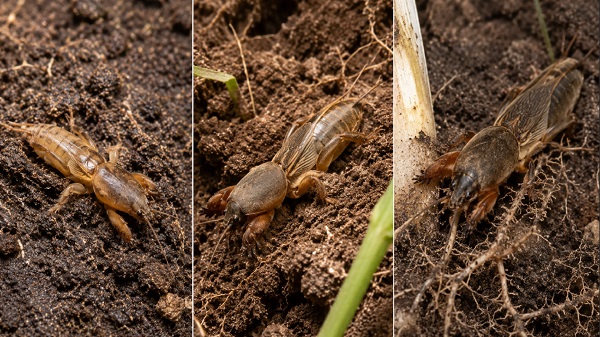
At first glance, a mole cricket looks like something out of a science fiction movie. It is a large, velvet-textured insect that combines the features of a cricket with the digging prowess of a mole. In the United States, homeowners primarily deal with three invasive species—the Tawny, Southern, and Short-winged mole crickets—along with the native Northern mole cricket.
- Anatomy of a Digger: Their most striking feature is their powerful, shovel-like front legs (digger claws). These are highly specialized for pushing through dense soil and cutting through roots.
- Size and Appearance: Adults typically range from 1 to 1.5 inches in length. They have a cylindrical body, a hard “shield” behind the head (pronotum), and are usually a brownish-gray or tawny color.
- The “Velvet” Coat: Their bodies are covered in fine, dense hairs that repel water and soil, allowing them to swim through moist earth without getting bogged down.
The Life Cycle: Understanding the Timeline of Destruction
Timing is everything when it comes to mole cricket control. Their life cycle is a predictable clock that savvy homeowners can use to their advantage. In most parts of the U.S., there is only one generation per year.
Spring: The Mating Season
As the soil warms up in March and April, adult mole crickets emerge from their deep winter tunnels. This is when the males perform their famous “singing.” They construct megaphone-shaped burrow entrances that amplify their chirps to attract females. After mating, females can burrow up to 10 inches deep to lay clutches of 30 to 60 eggs.
Summer: The Nymph Phase
By late May or June, the eggs hatch into nymphs. These are essentially miniature, wingless versions of the adults. This is the most critical time for lawn care, as young nymphs are voracious eaters but are much easier to kill with treatments than the armored adults.
Fall and Winter: The Mature Menace
As fall approaches, the nymphs mature into adults. They dig deeper into the soil to escape the frost, becoming relatively dormant until the following spring. However, in warmer climates like Florida, they may remain active year-round.
The Damage: Why They Are a Homeowner’s Nightmare
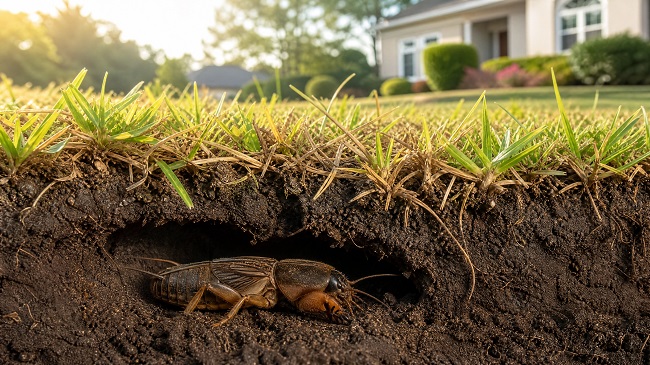
Mole crickets cause damage in two distinct ways: through their feeding habits and their tunneling activity.
1. Mechanical Damage (Tunneling)
As they “swim” through the upper inch of soil, they detach the roots of the grass from the dirt. This causes the turf to dry out and die. If your lawn feels “spongy” when you walk on it, you are likely walking over a network of mole cricket tunnels.
2. Feeding Damage
While some species, like the Southern mole cricket, are primarily carnivorous (eating other insects), the Tawny mole cricket is a strict herbivore. They feed on the roots and shoots of warm-season grasses such as Bermuda, St. Augustine, and Centipede grass. They are also notorious for destroying vegetable seedlings and tubers like potatoes and carrots.
How to Identify an Infestation: The Soap Flush Test
Not sure if you have mole crickets? There is a simple, non-toxic way to find out. This is known as the Soap Flush Test, a favorite among professional landscapers.
- Mix 2 tablespoons of liquid dish soap (lemon-scented works best) in a 2-gallon watering can of water.
- Pour the mixture over a 2×2 foot area where you suspect activity.
- Wait for 3 to 5 minutes. If mole crickets are present, the soap will irritate them, forcing them to the surface.
If you see more than two or three crickets emerge in that small area, it is time to take action.
Control and Prevention Strategies
Managing mole crickets requires an Integrated Pest Management (IPM) approach. You cannot simply spray once and hope for the best.
Cultural Controls
- Proper Irrigation: Mole crickets love moist soil. Avoid overwatering your lawn, especially in the late afternoon. Watering in the morning allows the surface to dry before the crickets become active at night.
- Thatch Management: Thick thatch provides the perfect hiding spot. Regular verticutting or dethatching makes your lawn less hospitable.
Biological Controls
Nature has its own ways of keeping these pests in check. In Florida and Georgia, researchers have successfully introduced the Larra bicolor wasp and the Steinernema scapterisci nematode. These are specialized parasites that target mole crickets specifically without harming other beneficial insects.
Chemical Controls
If you must use pesticides, timing is vital. The best time to apply insecticides is in late June or early July, when the nymphs are small and active near the surface. Granular baits or liquid residuals containing active ingredients like Imidacloprid or Bifenthrin are common choices. Always water the lawn before and after application (as per label instructions) to move the chemical into the soil where the pests live.
Frequently Asked Questions (FAQ)
Do mole crickets bite or sting humans?
Mole crickets are not aggressive and do not have stingers. While they have powerful mandibles for chewing roots and strong legs for digging, they are harmless to humans. If you hold one, it might try to “dig” between your fingers, which can feel like a prickly pinch, but they do not pose a health risk.
Why do they only seem to appear at night?
Mole crickets are nocturnal. They spend their days in deep burrows to stay cool and moist. At night, they come to the surface to feed, mate, and move to new areas. This is why you often see them attracted to porch lights during the spring mating season.
Can mole crickets fly?
Yes! Adult mole crickets are surprisingly good flyers. They can travel several miles in a single night to find new territory or a mate. If you see them flying around your outdoor lights in the spring, it is a sign that they are beginning their reproductive cycle.
What is the best “natural” way to get rid of them?
Attracting natural predators is the best long-term solution. Birds like starlings and killdeer love to eat them. Additionally, applying beneficial nematodes (specifically Steinernema scapterisci) can provide years of control as the nematodes reproduce and spread throughout your soil.
Mole crickets are a formidable foe for any American gardener, but they are not invincible. By understanding their life cycle, performing regular soap flushes, and timing your treatments correctly, you can keep your lawn healthy and green. Remember, the key is to catch them while they are young—once they become armored adults in the fall, they are much harder to dislodge.